
South African Women Rise
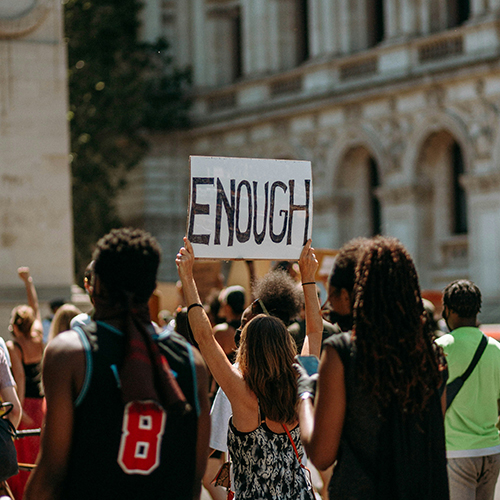
In November this year, South Africa officially declared violence against women a national emergency following the strength and resilience of South African women that participated in protests to bring attention to the worsening safety risks.
Women for Change called for a shutdown across South Africa which urged women to stay home from their work and not contribute to society. Friday lay-downs took place in 15 locations, these were women who publicly protested by lying down for 15 minutes to honour the 15 females that are murdered in South Africa on average each day.
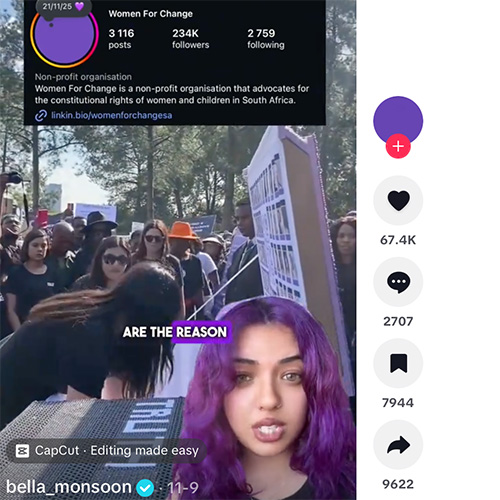
Wearing black to mourn and as a statement of resistance, these women captured the media’s attention which resulted in many social media accounts changing their profiles to purple which has since been named the purple movement. Celebrities like Tyla Banks and Bonang Matheba went purple in support alongside thousands of other users that anticipate a change in South Africa.
Shocking statistics like the fact that every 2.5 hours on average a women is murdered and every 12 minutes a women is raped on average in South Africa and that in just three months 9300 rapes had been reported. This fueled the determination of many angry women in hopes to protect each other and their children. Women for Change built an unburied casket which was 33.8% larger than the average casket to display the 33.8% rise in femicide this pressured the authorities to take action and visually educated the reality of the current state of the country.
They had also put forward a petition to declare violence against women a national emergency, public access to the sex offender register, mandatory education on violence against women in schools and workplaces and stricter bail conditions and stricter sentencing. This surpassed one million signatures and landed Women For Change a meeting with the government on December 8th.
This meeting had been described as emotional and that it ‘validated the cries of survivors after a long campaign’. It was then in that meeting that gender based violence was declared a national emergency. This should result in faster allocation of resources, stronger support systems and education to prevent the crisis from continuing. There have also been discussions in a need for the safety of children to also be considered as 42% of children in South Africa experience violence in their homes, schools and communities. Some believe that despite the new declaration, the danger remains and survivors remain expressing their frustration.
This movement truly proves the immense impact that women can have through unity and resilience. Though it is an ongoing issue that requires constant attention and awareness, the government has been seriously pressed to act on these demands and improvements are eagerly awaited. After all, being named the most dangerous country in the world for women isn’t appealing nor acceptable.
Donate to Women For Change here. https://womenforchange.co.za
By Paige Sutton